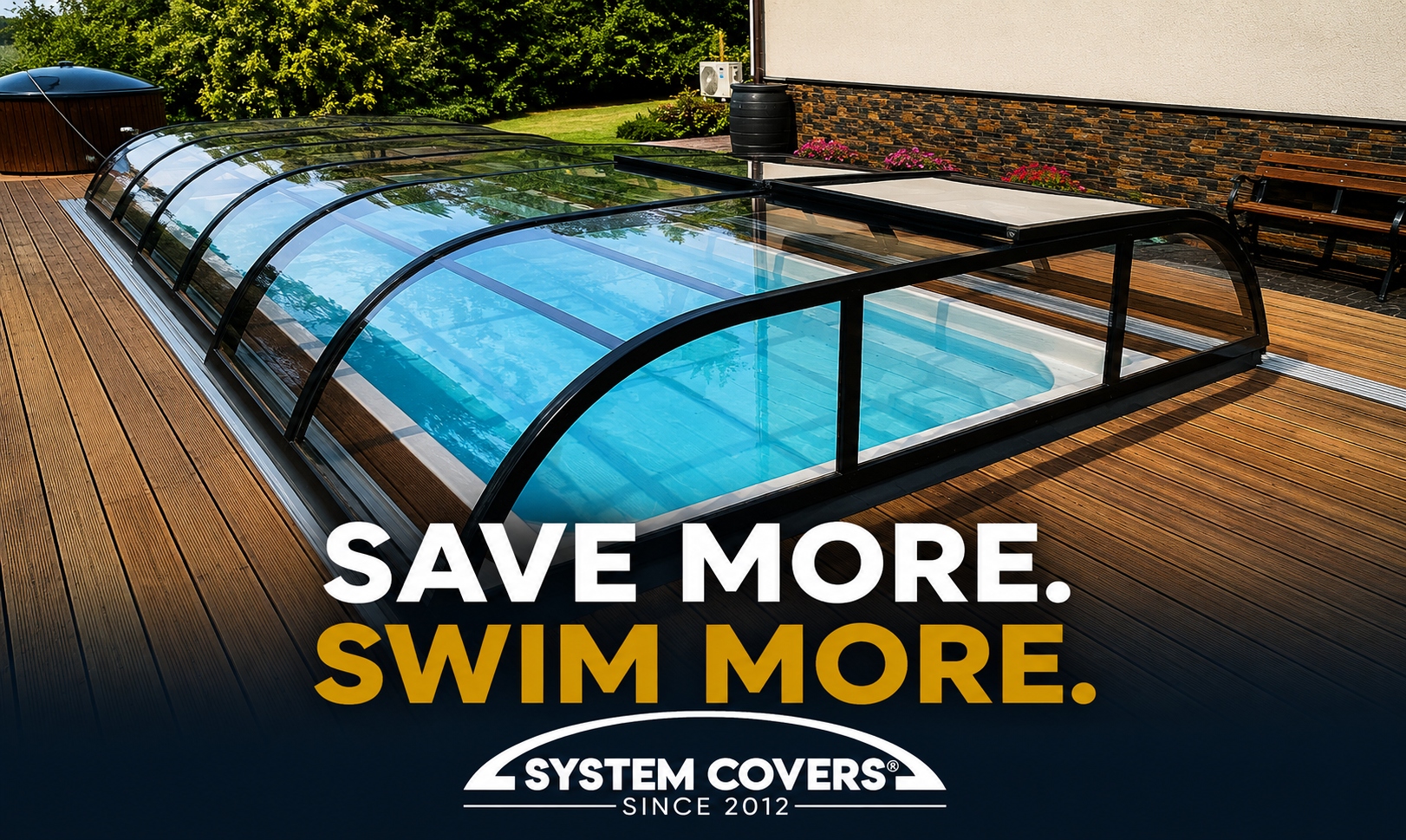
"How much will my pool cost me for the whole year?" This question comes right after the question about the cost of the structure. Six categories make up the real annual budget — chemicals, water, energy, maintenance time, repairs, and enclosure maintenance. We break each down and show how the enclosure changes the calculations compared to an open pool.
Six categories of pool maintenance costs
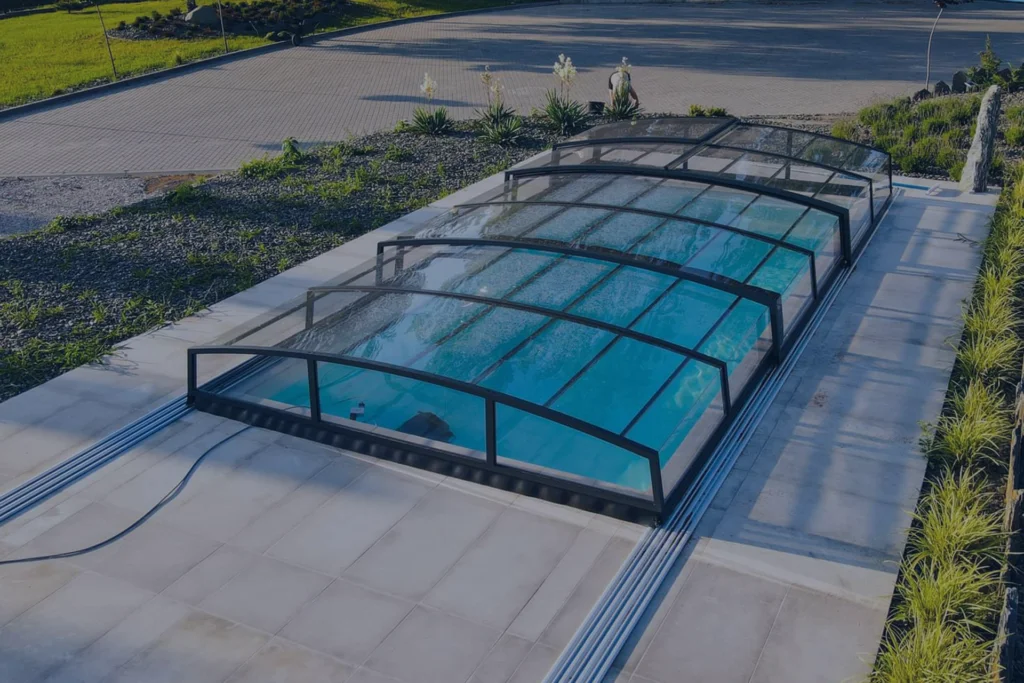
The full annual budget for the pool includes six categories — each depending on technology and usage:
| Category | Open pool | Enclosed pool |
|---|---|---|
| Chemicals | Higher consumption (chlorine oxidized by UV, pH adjustments) | Lower consumption (more stable chlorine in the shade) |
| Water | Higher replenishment (evaporation) | Lower replenishment (less evaporation under the cover) |
| Energy | Higher heat losses | Lower heat losses (the enclosure insulates) |
| Service time | Daily cleaning of leaves, insects, pollen | Occasional interior cleaning |
| Repairs | Higher risk (pool technology exposed) | Lower risk (protected installation) |
The first five categories are areas of savings. The sixth (maintenance of the cover, section 7) is a modest additional cost spread over time.
Pool chemistry — how the cover changes the calculation
Pool chemistry is a black box for most owners — the water looks "OK" or "bad", and how much chlorine, pH corrector, and algaecide goes into the pool annually is rarely counted. From the perspective of the pool cover, three mechanisms change the calculation:
- Less exposure to UV. Chlorine oxidizes under UV radiation — that's why a chlorine stabilizer (cyanuric acid) is a standard addition. Under a polycarbonate cover, UV is filtered, so chlorine lasts longer and doesn't require as frequent dosing.
- Fewer organic contaminants. Under an open pool, every falling leaf, insect, pollen, dust is organic material for chlorine to oxidize. Under the cover — there are fewer of these contaminants. A full breakdown of the topic in our article on protection against insects, leaves, and pollen.
- More stable water temperature. Temperature fluctuations (cool nights, hot days) affect the solubility of chemicals and the chemical parameters of the water. Under the cover, fluctuations are smaller, so pH and water hardness are more stable.
Practical consequence: pool owners with a cover report less frequent pH correction interventions and lower chlorine consumption. We do not provide specific percentages — it depends on the model of the cover, usage intensity, climate, and quality of source water.
Service time — daily routine
Service time is often an underestimated cost category — because it doesn't appear in any bill. But it is real. Daily 15-20 minutes of cleaning leaves, insects, and pollen from an open pool amounts to dozens of hours of work over the season.
Open pool
Daily: skimming leaves with a net, checking filters, cleaning skimmers. Time: ~15-20 min/day. In the swimming season (April-October), that adds up to dozens of hours.
Pool under cover
Occasionally: checking the interior, seasonal cleaning of the floor and walls. Time: ~30 min once every 2-3 weeks. A complete change in proportions.
Impact on lifestyle
Fewer routine duties = more time for actually using the pool. It's a different quality of weekends and vacations at home.
Argument for families
Fewer pool duties for parents = less friction in the family around pool maintenance. Pure operational gain.
There is no single number for specific hours annually — it depends on location (forest nearby = more leaves), pool size, and individual cleanliness standards. But the trend is consistent: a cover reduces daily service routine to a minimum.
Water — evaporation and replenishment
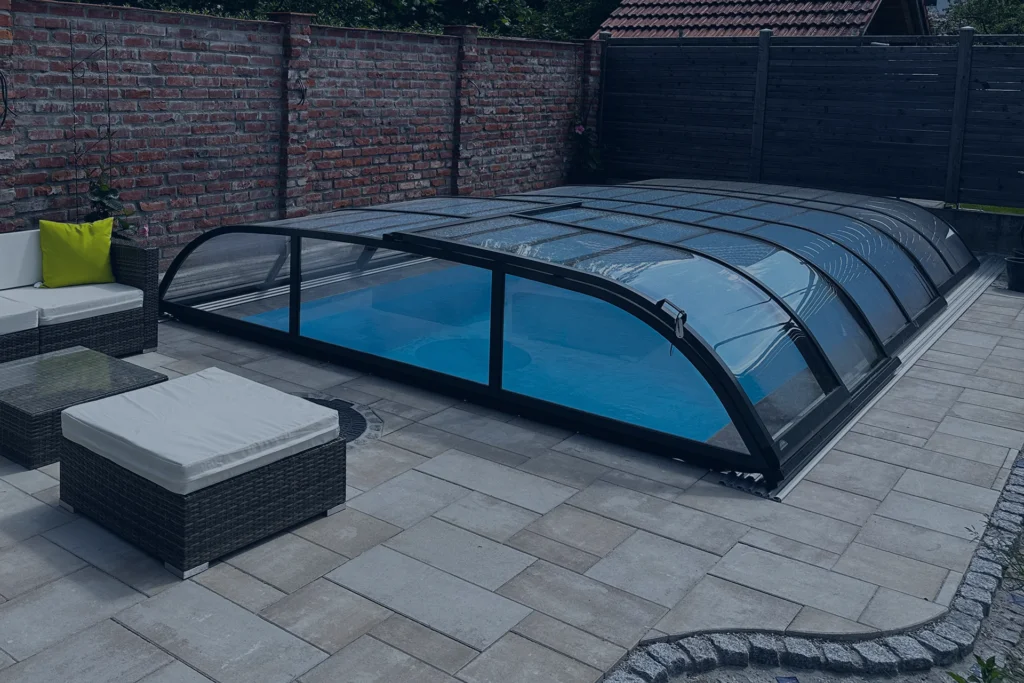
Water evaporates from every pool — it's physics, and it can't be completely stopped. An open pool in the summer season requires regular replenishment (usually every few days), especially during heat and windy conditions. The physics remains the same under the cover, but the conditions are different:
- No wind above the surface. Wind is the main factor accelerating evaporation. The enclosed cover eliminates this factor — water vapor remains in the enclosed space and partially returns to the pool as condensation.
- Higher humidity under the cover. Air quickly saturated with water vapor reduces further evaporation. This is a natural mechanism for slowing down water loss.
- More stable water temperature. Smaller temperature fluctuations between day and night reduce the intensity of evaporation on hot days.
Practical consequence: pool owners with a cover replenish water less frequently. This saves water (water bill) and time (the replenishment process, balancing chemicals after adding water). We do not provide specific liters per year — it depends on the size of the pool, climate, and intensity of use.
Heating — energy costs in the season
Heating water is typically the largest item in pool energy costs — regardless of the source (heat pump, electric heater, solar). The cover affects this cost in two ways:
- Less heat loss at night. An open pool loses heat through evaporation (most intense at night) and through exchange with cool air. The cover closes this exchange, acting as an insulator.
- Less loss on cool days. Early spring and autumn days with sun but cool wind are scenarios where the cover makes the biggest difference. The sun comes through the polycarbonate, but heat does not escape outside as quickly as from an open pool.
We do not provide specific numbers for the heat pump or estimates of energy savings. The mechanism is physically correct — the cover reduces heat loss. The scale of savings depends on the heating source, climate, and usage method.
Seasonal repairs and replaceable elements
An open pool is exposed to external conditions all year round — UV, hail, frost, snow, wind, dust. All of this affects the materials and replaceable elements of pool technology. The cover protects against this exposure:
- Pool liner. Exposed to UV, frost, and heat, the liner lives shorter. Under the cover — protected from direct sunlight, longer lifespan.
- Filter pump and skimmer. Leaves, insects, pollen, sand grains introduce contaminants into the filtration system. Less contamination = less frequent cleaning and replacement of cartridges.
- Ladder, lighting, accessories. All metal and electrical components are more durable under the cover than in the open air.
Maintenance of the cover itself
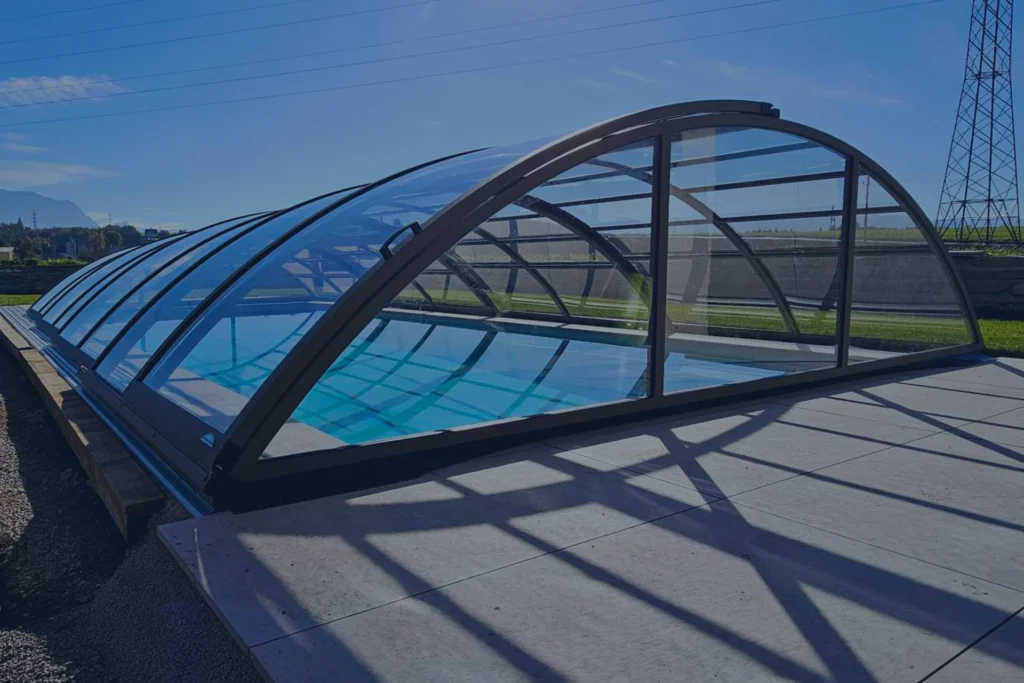
The sixth category of costs is the maintenance of the cover itself — an element absent with an open pool. The good news: maintenance is simple and inexpensive. The approach of a System Covers owner is: "treat the cover like a car".
- Seasonal cleaning of polycarbonate. 2-3 times a season (spring, mid-summer, autumn) — water with a gentle dish soap, microfiber. No aggressive chemicals (acetone, alcohol, ammonia — they damage the UV filter). A complete guide in our article on cleaning polycarbonate pool covers.
- Check the locks before winter. In autumn, it's worth checking the windproof locks and segment locks — whether they operate smoothly and if there are no loose parts. This secures the cover against winter winds.
- WD-40 on moving parts. Once a year, apply it to handles, hinges, and locking mechanisms. The spray costs a few zlotys and lasts for several seasons.
- Check the rails every few years. Anodized rails are very durable, but it's worth checking their condition every few seasons. If necessary — clean with a brush, apply technical grease.
The full list amounts to an annual cost of around a few dozen zlotys for chemicals + 2-3 hours of work once a season. This is clearly less than the savings in the other five categories.
Frequently Asked Questions (FAQ)
We do not provide specific percentage savings. Every pool is different — size, local climate, intensity of use, quality of source water, heating source, media prices in a given location. However, the mechanisms are consistent across all five categories (chemicals, water, energy, time, repairs) — the cover reduces costs. The scale depends on individual conditions.
Yes, in a typical scenario. Three mechanisms: less exposure to UV (chlorine is more stable), fewer organic contaminants (less to oxidize), more stable water temperature (better control of pH and hardness). Specific consumption depends on the model of the cover, climate, and water quality.
We do not provide a specific number. Evaporation is physically lower under the cover — no wind over the surface, higher humidity, more stable temperature. In practice, topping up goes from daily (in hot weather with an open pool) to occasional (after intensive use, seasonally).
Yes, the mechanism is physically correct — the cover reduces heat loss through evaporation and exchange with cool air. The scale of savings depends on the heating source, climate, and usage method. We do not provide specific numbers.
We do not provide a specific number of hours. But daily 15-20 minutes of cleaning leaves, insects, and pollen from the open pool over the swimming season (April-October) amounts to dozens of hours. Under the cover, this time reduces to a few hours annually — occasional cleaning of the interior.
2-3 times a season — in spring (preparing for the season), mid-summer (after initial pollen), autumn (before winter). Water with a gentle dish soap, microfiber. No aggressive chemicals.
No. The annual budget for maintenance chemicals for the cover (dish soap, WD-40, microfiber) is a few dozen zlotys. Plus 2-3 hours of work once a season. Clearly less than the savings in the other categories.
Yes, in three dimensions. Less exposure of the foil to UV and heat — longer lifespan. Fewer contaminants in the filtration system — less frequent cleaning and replacement of cartridges. Less cyclic load (expansion/contraction of materials) on the ladder, lighting, accessories.
Do you want a specific quote for the pool cover?
The quote is free and non-binding — provide the dimensions of the pool, preferred model, and location. You will receive a specific amount KPL with no hidden costs, including delivery to your home, RAL color matching for the facade, and complete production documentation from our facility in Szydłowiec.
Order a free quote →