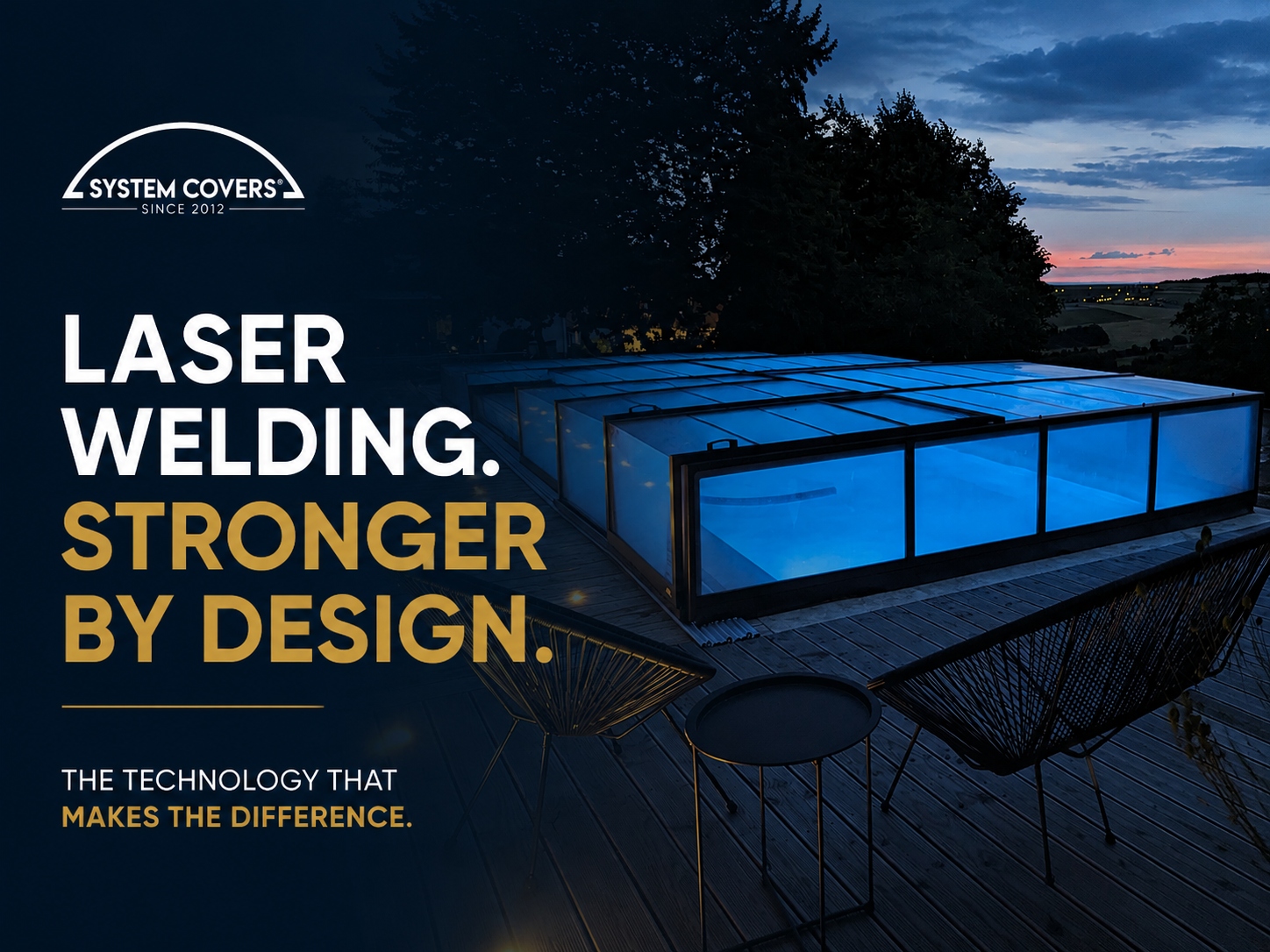
Laser welding of aluminum profiles is one of the four key stages in the production of pool enclosures by System Covers — alongside CNC cutting, numerical bending of arcs, and powder coating in our own paint shop. This is a technical detail that the customer does not see, but which determines after years whether the enclosure looks like new or starts to fall apart. Connections that are not visible. Repeatability that cannot be distinguished from the design. A material that does not yellow. In this article, we show how the enclosure is created from profile cutting to packaging for transport.
Laser welding vs traditional methods of joining profiles
Aluminum profiles in pool enclosures must be joined — sides with the roof, cross segments with main guides, angular sections with arcs. Various techniques are used in the pool enclosure industry: traditional arc welding methods, structural adhesive bonding, screwing elements together, and laser welding.
Each of these methods provides a different aesthetic and durability of the structure over the long term. At System Covers, we use laser welding — the laser beam joins aluminum with exceptional precision, without visible seams and without the need to mask connections.
Technical consistency — absence of decorative ends
In structures joined by traditional methods, seams are visible, so the manufacturer masks them with decorative ends — plastic covers glued at the corners and joints of the profiles. This is a standard solution in the cheaper segment of pool enclosures.
In practice, such decorative ends can peel off over time. This is one of the most common operational problems in enclosures joined by methods with visible seams.
In our enclosures, there are simply no decorative ends — because there is nothing to mask. The laser seam is practically invisible, and the profile remains structurally uniform from one end to the other. Customers who compare our enclosures with other offers on the market often say the same thing: they see our connections, meaning their absence. That we do not screw, that we do not mask.
Without ends
No plastic covers at the corners and joints of segments. The profile is uniform.
Without screws
No screwed connections that may loosen over time.
Without caps
No elements to replace during the service life of the structure.
Without glue
No glued elements that could come unstuck due to UV, frost, or pool chemicals.
CNC — cutting and drilling profiles with repeatability
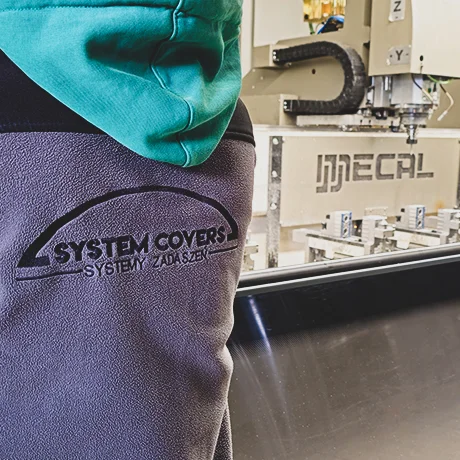
Before the aluminum profiles reach the laser welding station, they go through the CNC machine. Cutting and drilling of all components is done with full repeatability — without the risk of human errors and deviations from the design.
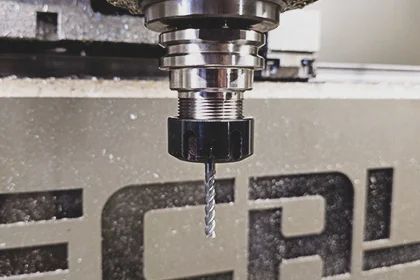
CNC technology (Computerized Numerical Control) operates based on numerically input parameters. Every hole, every cutting line, every detail is made exactly according to the design. This is crucial for later assembly — when the customer assembles the enclosure from the supplied components, perfect repeatability means everything fits right away, without additional work.
Numerical bending — identical arcs in every piece
The arched models of our enclosures (Maledives, Rodos, Dominicana, Tenerife) require precise bending of aluminum profiles to a specific curvature. This is a key stage for the aesthetics of the structure — each segment must have an identical arc for the construction to maintain a continuous line from start to finish.
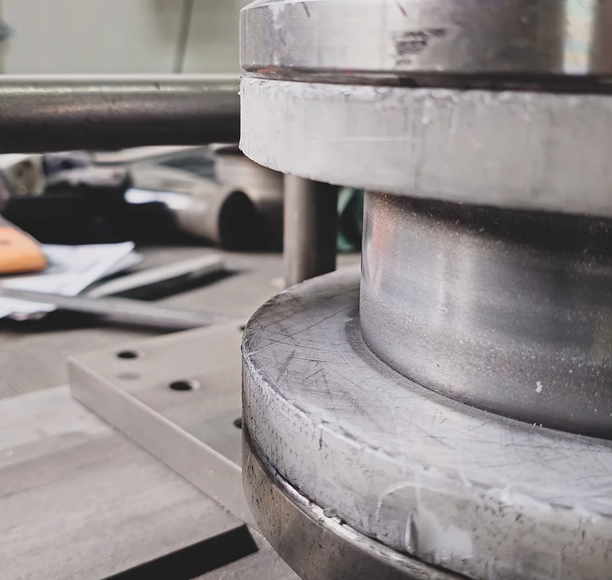
Traditional manual bending methods can result in minimal differences between segments — the arc of the first segment may slightly deviate from the arc of the second. Once the structure is assembled on the terrace, these small differences become visible. With the numerical bender, this problem does not exist. The machine operates fully automatically based on the input parameters — each segment has an identical curvature.
Powder coating facility in our own hall
After cutting, drilling, bending, and welding, the profiles go to the painting facility. At System Covers, we have our own fully equipped powder coating facility — this is important for three reasons.
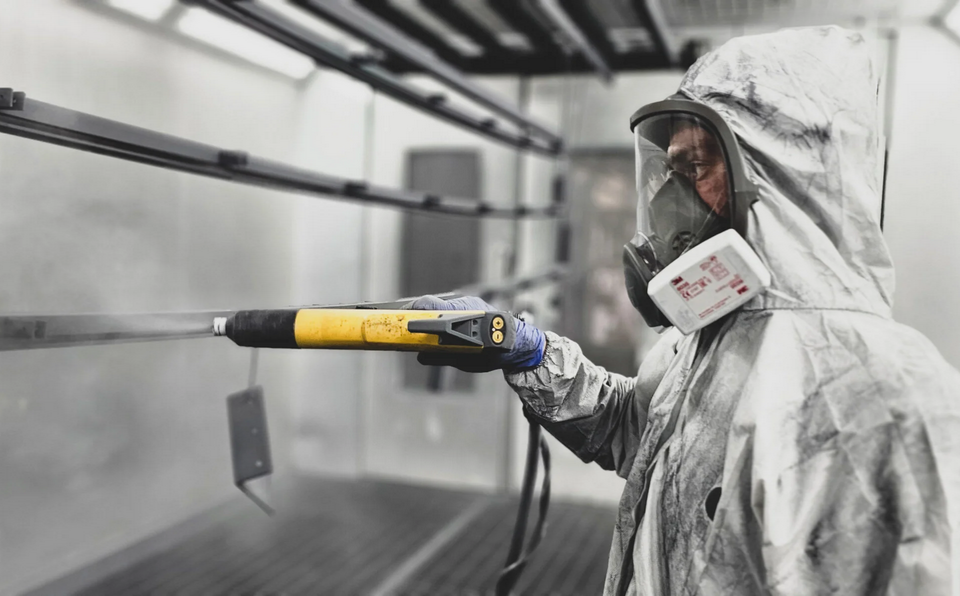
- Full quality control. Each element is painted according to our internal standards — we do not outsource painting to external companies, so there is no discrepancy between our requirements and the contractor’s execution.
- Faster turnaround time. Painting takes place in the same hall where the entire enclosure is produced. The lack of transport between different locations shortens production time.
- Color flexibility included at no extra charge. We fulfill orders in any color from the RAL palette — without additional charges for non-standard colors. The customer chooses a color to match the house facade, fencing, or other external elements.
What the customer ultimately receives
Four stages of production — CNC, numerical bending, laser welding, powder coating — make up an enclosure that is meant to be durable, aesthetic, and structurally repeatable. From the customer’s perspective, this means specific things:
- No consumable parts that need to be replaced after years (end caps, plugs, adhesives).
- Identical dimensions and geometry of each piece — the self-assembly system works because the elements fit together without additional work. Aesthetics of the structure that remains stable over time — without yellowing, peeling of decorative elements, or visible joints. Any RAL color to match the house facade at the standard enclosure price.
- Estetyka konstrukcji, która pozostaje stabilna w czasie — bez żółknięcia, odlepiania się elementów dekoracyjnych, widocznych łączeń.
- Dowolny kolor RAL pod elewację domu w cenie standardowej obudowy.
These are specific consequences of the entire production process taking place in our facility in Szydłowiec — from profile cutting to packaging the finished cover for transport. No subcontractors are involved at any stage.
Frequently Asked Questions (FAQ)
Traditional welding methods leave visible seams — the joints are built up above the surface of the profile, requiring later grinding or masking with decorative ends. Laser welding joins elements with exceptional precision, and the seam is practically invisible. From the customer’s perspective, the most important difference is aesthetics and the absence of consumable elements (ends, glue) in the finished structure.
Yes, although the mechanism is indirect. The laser seam itself is not significantly stronger than a well-executed traditional seam. The difference lies in what is absent in a laser-welded structure — there are no glued elements (decorative ends) that may detach over the years. There are no screwed elements that can loosen. So we improve durability by eliminating weak points, not by strengthening the seam.
The entire production process takes place in our facilities in Szydłowiec — CNC cutting and drilling, numerical bending of arches, laser welding, powder coating. We do not outsource any stage to external subcontractors. This allows us to maintain quality control at every stage and manage delivery times.
Arch models of covers (Maledives, Rodos, Dominicana, Tenerife) consist of telescopic segments that slide into one another. For the system to operate smoothly, the curves of all segments must be identical — the smallest differences cause segments to jam. A numerical bender ensures that each piece has the same arc, whether it is the first or the hundredth segment from the batch.
Yes, as standard. We have our own powder coating facility where we fulfill orders in any color from the RAL palette. No additional charges for custom colors — the color is chosen at the ordering stage and becomes part of the total price.
Yes. In the case of serious mechanical damage (impact, accident), the profile comes back to us for service. The system has not been changed for 5 years, so spare parts are readily available. Replacing a segment or element is possible, although in our practice it happens very rarely — most often, only the segment lock butterflies (designed as a safety feature) wear out over time.
No. The joining method does not significantly affect the weight of the structure. The weight mainly depends on the thickness of the aluminum profile (our standard is 40×50 mm, in the reinforced version 80×50 mm) and the thickness of the polycarbonate (3 mm standard, 4 mm option). The cover remains light enough that two people can install it in about 6 hours.
The simplest way — check the corners and joints of the segments. Are there plastic covers (decorative ends) there? Are screws or rivets visible? If so, that’s a sign that the structure is joined using traditional methods with masked joints. In laser-welded covers, the profile is uniform — without covers, without screws in visible places.
Do you want a cover from our production in Szydłowiec?
The quote is free and includes model selection, RAL color, number of segments, and transport to your home — all in one total price. Each cover is made from profile cutting to packaging for transport in our facility, without subcontractors.